How to Care for Your Implants
You invested in dental implants to get a strong, natural-looking smile back. Dental implant maintenance is how you keep it. The good news is that an implant can’t get a cavity, and caring for one feels a lot like caring for your natural teeth. The catch is that the gums and jawbone holding your implant in place can still get infected, and that’s where most long-term problems start.
At Holyoke Mall Dental, Dr. Eric Chen and our team help patients across Holyoke, MA, and the Pioneer Valley protect their implants for the long haul. This guide covers the daily routine, what happens at a maintenance visit, the warning signs worth acting on, and answers to the questions patients ask us most. If you’re looking for a dentist in Holyoke, MA, to help you keep your implants healthy, call (413) 538-7400.
Dental implant maintenance at a glance
- Brush twice a day with a soft-bristled toothbrush and a low-abrasive, non-whitening toothpaste.
- Clean between your teeth and around each implant daily with floss, an interdental brush, or a water flosser.
- Use an alcohol-free antimicrobial mouthwash if your dentist recommends one.
- Schedule a dental exam and professional cleaning at least every six months, or more often if your dentist advises it.
- Call your dentist promptly for bleeding, swelling, a bad taste, or a loose crown.
Do Dental Implants Need Special Maintenance?
Dental implants don’t need a special routine, but a consistent one. Titanium and porcelain don’t decay, yet plaque still builds up on them, and the tissue around an implant is more vulnerable than the tissue around a natural tooth. That’s because natural teeth are anchored by a ligament that helps defend against infection, and implants don’t have one. Bacteria that collect along the gumline can inflame the gums first, which is much like gingivitis around a natural tooth, and, if left alone, can start to break down the bone underneath.
This is more common than most people realize. A 2025 consensus report from the American Academy of Periodontology and the Academy of Osseointegration cites studies estimating that early gum inflammation around implants affects roughly 43% to 47% of implant patients, and peri-implantitis, the more advanced stage involving bone loss, affects roughly 20% to 22%. The report also stresses that ongoing, supportive maintenance is essential for keeping implant tissues healthy over time. Consistent oral hygiene and regular dental care make a real difference.
Your Daily Dental Implant Care Routine
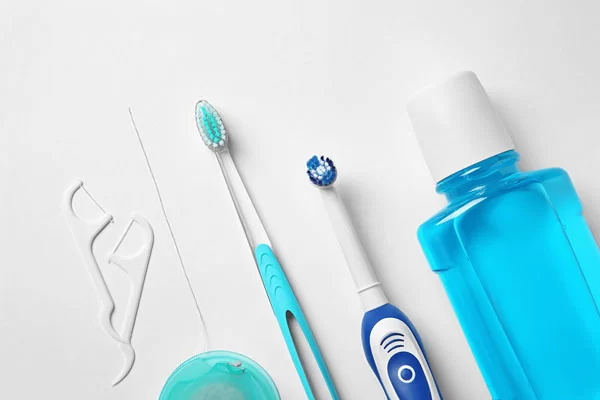
Think of daily implant care as three jobs: clean the surfaces, clean the gaps, and keep bacteria in check. None of it takes long, and all of it protects your oral health.
Brush Twice a Day, Gently
Use a soft-bristled manual or electric toothbrush and brush for two minutes, morning and night. Angle the bristles toward the gumline, where the crown meets the gum, since that’s where plaque hides. Light pressure and small circular motions work better than scrubbing, which can irritate the gums and wear at the restoration over time. Be just as thorough on the back and tongue-side surfaces, which are easy to rush.
Choose the Right Toothpaste
You don’t need a specialty “implant” toothpaste. You do need to avoid harsh ones. Gritty, abrasive formulas can leave tiny scratches on a crown or abutment, and rough surfaces hold onto plaque more easily. Look for a low-abrasive, non-whitening toothpaste.
Many dentists suggest choosing one with a low RDA (Relative Dentin Abrasivity) value, ideally under 70, and it’s smart to skip charcoal, baking soda, and “extra whitening” formulas. Not sure about the one in your bathroom? Bring it to your next visit, and we’ll take a look.
Clean Between Your Teeth and Around Each Implant
Brushing can’t reach the gaps, so daily interdental cleaning is a must. Options include:
- Unwaxed dental tape or implant floss, which slides around the post and restoration without shredding.
- Floss threaders, which let you slip floss under a dental bridge or denture and up along the implants.
- Interdental brushes, tiny brushes that clean the spaces between an implant and the neighboring teeth. Ask us which size fits your mouth, and use them gently.
Add a Water Flosser
A water flosser is a great partner for traditional floss, especially if you have several implants, an implant-supported bridge, or an implant-supported denture. Aim the stream along the gumline and around each implant, start on a low-pressure setting, and work your way around the whole mouth. It’s a supplement to brushing and flossing, not a replacement for them.
Rinse Smart
Rinsing after meals helps clear away food and bacteria. If your dentist recommends a mouthwash, an alcohol-free antimicrobial rinse is usually the gentler choice for your gums. Swish for about 30 seconds, then spit. Mouthwash works best as a finishing step after brushing and cleaning between your teeth, not instead of them.
How to Clean Different Types of Implant Restorations
Your routine stays the same at its core, but a few details change depending on what’s attached to your implants.
Single-Tooth Implant Crown
A single crown is the simplest to care for. Brush it like any other tooth, paying close attention to the gumline, and floss or use an interdental brush on both sides every day.
Implant-Supported Bridge
With a bridge, the artificial teeth are joined together, so you can’t floss straight down between them. Use a floss threader, super floss, or a water flosser to clean underneath the bridge where food and plaque collect. This is also the area where food is most likely to get trapped, so don’t skip it.
Implant-Supported Dentures
Implant-supported dentures need their own routine. Depending on your design, your denture may be removable or fixed in place. If it’s removable, take it out to clean it daily with a soft brush and a non-abrasive cleanser, and clean the implants and gums underneath, too. If it’s fixed, use a water flosser and floss threaders to clean beneath it. Either way, Dr. Chen will show you exactly how to care for your specific setup.

Caring for Your Implant After Surgery
The first days and weeks after implant surgery are a special stretch. Follow the written instructions you were given, and keep them handy. You can also review our post-op instructions. In general, that means being gentle around the surgical site, eating softer foods, and keeping the area clean exactly as directed. If your treatment also involved a tooth extraction or a bone graft to build up the jawbone, healing may take longer, so it’s especially important to follow those directions closely.
Even before your final crown is placed, good hygiene matters. Once the implant has fully integrated with your jawbone and the restoration is in place, you’ll shift into the long-term routine above.
What Happens at a Dental Implant Maintenance Visit
Your at-home routine handles the daily buildup. Your maintenance visits handle everything you can’t see or reach. At a typical implant checkup at our Holyoke dental office, your dentist and hygienist will:
- Examine your gums for redness, swelling, and bleeding around each implant.
- Measure the gum pockets around the implants with gentle probing, which helps catch early problems.
- Take X-rays at appropriate intervals to check the bone that supports your implants.
- Check your bite and restoration for wear, chips, or a loose crown or abutment screw.
- Clean and polish the implants using tools and techniques chosen to avoid scratching the implant surfaces.
- Review your home routine and show you where to improve.
- Check your natural teeth, too, as part of your general dentistry care.
Most patients do well with a dental exam and cleaning about every six months. Some people, especially those with a history of gum disease, benefit from visits every three to four months. Dr. Chen will recommend a schedule based on your gum health and your risk factors.
Habits and Health Factors That Put Dental Implants at Risk
Implants are durable, but a few habits and conditions can shorten their lifespan:
- Teeth grinding or clenching. Constant pressure can chip porcelain and loosen parts. A custom night guard can help protect your restoration.
- Chewing ice, hard candy, or using your teeth as tools. These can crack a crown just like they can crack a natural tooth.
- Skipping dental visits. Early gum inflammation is usually painless, so it goes unnoticed without an exam.
- A history of gum disease. If you’ve had gum disease, your gums are more prone to it around implants, too.
- Health conditions that affect healing and gum health, such as poorly controlled diabetes. Keep us updated on any changes to your health or medications.
- Harsh or abrasive products. Whitening pastes, stiff brushes, and aggressive scrubbing wear at the restoration and irritate the gums.
Peri-Implantitis and Other Dental Implant Problems: Warning Signs
Most implants stay healthy for years, but catching a problem early makes it far easier to treat. Here’s what to watch for.
Peri-Implant Mucositis (Early and Reversible)
This is inflammation of the gum tissue around an implant, without bone loss. Think of it as gingivitis for implants. Signs include red, puffy gums and bleeding when you brush or floss. The encouraging part: at this stage it’s typically reversible with a professional cleaning and better home care.
Peri-Implantitis (Bone Loss)
If inflammation goes untreated, it can spread to the bone that supports the implant. This is peri-implantitis. Warning signs include persistent bleeding, swelling, a bad taste or odor, pus, gums that pull away from the implant, and, in later stages, a loose feeling. Treatment can range from deeper professional cleaning and medication to surgery in advanced cases, and the earlier it’s caught, the more options you have.
Loose Crown or Abutment Screw
Over time, the connection between the crown and the implant can loosen. If your crown feels wobbly or clicks when you bite down, call us. It’s usually a repair rather than a replacement, but waiting can put strain on the implant itself.
Chipped or Cracked Restoration
Crowns, bridges, and dentures can chip or crack from normal wear, grinding, or an accident. Depending on the damage, we can often repair or replace the restoration without touching the implant.
Gum Recession
If the gums pull back and expose the edge of the restoration or the implant, bacteria can reach areas they shouldn’t. Let us know if you notice your gumline changing so we can talk through your options.
When to Call Your Dentist
Don’t wait for your next appointment if you notice:
- Bleeding, swelling, or tenderness around an implant
- A bad taste or persistent bad breath that won’t go away
- A loose, shifting, or clicking crown
- Pain when you bite down
- Gums that look like they’re pulling away from the implant
If your implant feels loose or moves, call right away.

How Other Dental Care Affects Your Dental Implants
Your implants are one piece of your overall oral health. Here’s how the rest of your dental care fits in.
- Teeth Whitening: Whitening gels lighten natural teeth but don’t change the color of porcelain crowns. If you’re planning to whiten, talk to us first. It’s usually best to whiten your natural teeth before a crown’s shade is chosen, so everything matches.
- White Fillings: An implant can’t get a cavity, but the natural teeth beside it can. Prompt treatment with tooth-colored fillings protects your bite and keeps your implant from taking on extra load.
- Orthodontics: Implants are anchored in the jawbone, so they don’t move with braces or aligners. If you’re considering Invisalign or other orthodontics, we’ll plan around your implants.
- Cosmetic Dentistry: Veneers, bonding, and other cosmetic dentistry treatments can work alongside implants, and we’ll make sure your whole smile looks cohesive.
- General Dentistry: Routine exams, cleanings, and X-rays keep your natural teeth and your implants in sync.
Frequently Asked Questions
It can. Food can collect along the gumline and, with bridges and dentures, underneath the restoration. Daily flossing, interdental brushes, or a water flosser clears it out. If you notice food catching in the same spot repeatedly, tell us, because it can be a sign that something needs adjusting.
A water flosser is a helpful addition, especially around bridges and dentures, but it doesn’t have to replace floss. Many patients get the best results using both. We’re happy to show you a technique that fits your restoration.
You can whiten your natural teeth, but the porcelain on an implant crown won’t lighten. That can leave your teeth mismatched, so talk to us before you whiten. It’s often best to whiten first, then match the crown to your new shade.
Coverage varies by plan. Many plans cover routine exams and cleanings as preventive care, but coverage for implant-related services can differ. Our team can help you understand your benefits, and you can review our financing options for anything your plan doesn’t cover.
Choose Our Dentist in Holyoke, MA, for Dental Implant Care
Whether your implants are brand new or have been part of your smile for years, consistent care is what keeps them working. If you’re searching for a dentist near you in Holyoke, MA, Dr. Eric Chen and the Holyoke Mall Dental team are ready to help you protect your investment, from your next dental exam to any questions about your routine at home.
Call (413) 538-7400 or book your appointment online. New to our practice? Start with our new patient information or contact our Holyoke dental office. We’re located at 150 Lower Westfield Rd, Holyoke, MA 01040, and we welcome patients from Holyoke, Springfield, Chicopee, Westfield, West Springfield, Agawam, Wilbraham, South Hadley, Southampton, and nearby Pioneer Valley communities.