Tired of Loose Dentures? There’s a More Stable Option
If your dentures slip while you talk, click while you chew, or need a tube of adhesive just to get through the day, you’re not stuck with them. Implant-supported dentures anchor directly to your jawbone, giving you the stability and natural look that traditional dentures can’t match. As a trusted dentist in Holyoke, MA, Holyoke Mall Dental helps patients throughout the area replace missing teeth with confidence.
Contact our dental practice in Holyoke at (413) 538-7400 to schedule your dental implant consultation. We welcome patients in the Greater Springfield area, including Westfield, Southampton, South Hadley, and nearby Western Massachusetts communities.
What Are Implant-Supported Dentures?
Implant-supported dentures, also called overdentures, are a type of denture that attaches to dental implants instead of resting on your gums. A dental implant is a small titanium post placed into the jawbone, where it fuses with the bone over several months in a process called osseointegration. Once healed, an abutment connects the implant to your custom denture, holding it firmly in place.
Because the denture is supported by bone rather than gum tissue, implant-supported dentures don’t require the messy adhesives that conventional dentures depend on, and they don’t shift or click when you eat or speak.
There are two main attachment styles:
- Ball-retained
- Bar-retained
Both can replace an entire arch of missing teeth, upper or lower, and are typically recommended for patients who’ve lost most or all of their natural teeth and have enough jawbone density to support an implant.
Types of Implant-Supported Dentures
Ball-Retained (Snap-In) Dentures
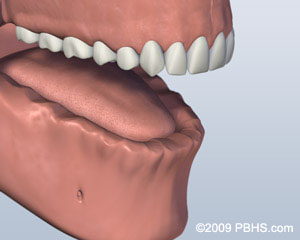
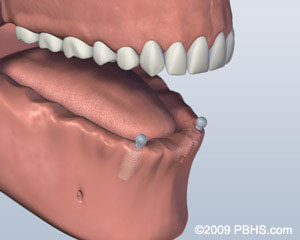
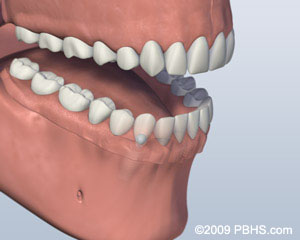
Ball-retained implant-supported dentures, sometimes called snap-in dentures or ball attachment dentures, are one of the more affordable ways to stabilize a lower denture. This option typically uses two to four implant posts in the lower jaw. Each implant has a ball-shaped attachment, and the custom denture has a matching socket that snaps onto it. The result is a secure, natural-feeling fit that you can still remove yourself for cleaning.
Bar-Retained Dentures
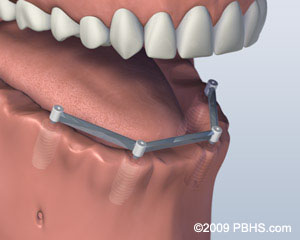
Bar-retained dentures, also known as bar attachment dentures, offer an even firmer hold by using four to six titanium implants. A thin metal bar connects the implant abutments, and the denture clips onto that bar. This design distributes bite force more evenly across the jaw and provides extra reinforcement for patients who want maximum stability.
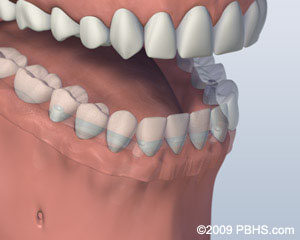
Screw-Retained (Fixed) Dentures
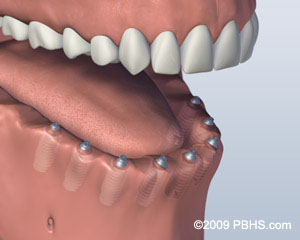
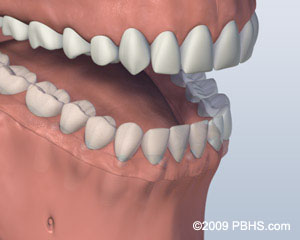
Screw-retained dentures are the most permanent option for the lower jaw. Rather than snapping on and off, they’re secured directly to the implants with screws and can only be taken out by your dentist during professional cleanings. Because they don’t cover the gums as a removable denture does, many patients find them more comfortable and more natural-feeling day-to-day.
Implant-Retained Upper Dentures
Traditional full dentures for the upper arch cover the entire roof of the mouth, which can dull taste and the sensation of food temperature. Implant-retained upper dentures are supported by implants placed in the upper jawbone, which, depending on how many implants are used, can eliminate the need to cover the palate at all. Because the upper jawbone is naturally less dense than the lower jawbone, we typically recommend more implants for upper-arch restorations. This is still a removable denture, so cleaning the bar and denture at home stays simple.
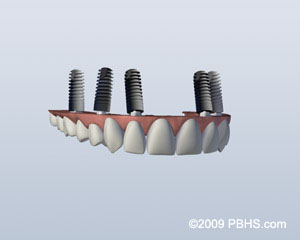
Depending upon the number of implants to be placed, it may be possible to eliminate the need for covering the roof of your mouth with a complete denture. This option allows you to fully taste your food and gives you a better sense of its temperature. Your denture will also feel and look more natural. You will still have a removable denture, making it easy to clean the support bar and denture.
Why Choose Holyoke Mall Dental as Your Dentist in Holyoke, MA
Patients searching for a dentist near you who offers implant-supported dentures don’t need to look outside the area. Holyoke Mall Dental provides restorative dentistry, general dentistry, and cosmetic dentistry services for the whole family, backed by the latest dental technology and a team that takes the time to explain your options. We proudly serve patients throughout Holyoke, Springfield, Chicopee, Westfield, West Springfield, Agawam, and Wilbraham.
Implant-Supported Dentures vs. Conventional Dentures
If you’re weighing your options, here’s how they compare:
- Conventional (full) dentures rest on the gums and are held in place with adhesive. They’re removable and typically the lowest-cost option, but they can slip, cause sore spots, and don’t prevent jawbone loss.
- Implant-supported dentures (overdentures) anchor to implants in the jawbone. They cost more upfront but offer far greater stability, better chewing function, and help preserve bone density over time.
- Partial dentures or dental bridges may be a better fit if you’re only missing a few teeth rather than a full arch. An implant-supported denture is designed for patients missing most or all of their natural teeth on one arch.
Not sure which category you fall into? Our complete dentures and partial dentures pages break down the other options, or you can just give us a call, and we’ll help you figure out the right fit.
Benefits of Implant-Supported Dentures
Opting for implant-supported dentures to replace lost teeth offers numerous advantages, such as:
- Improved stability and security: Because the denture is anchored to the jawbone instead of the gums, you can speak and smile without worrying about it slipping.
- Jawbone preservation: When natural teeth are lost, the jawbone gradually shrinks, which can make the face look sunken over time. The pressure from an implant helps keep that bone stimulated and intact.
- Better quality of life: Patients can eat a wider range of foods, speak more clearly, and smile with confidence.
- Built to last: With good home care and regular checkups, implant-supported dentures can last many years, sometimes decades.
- A natural look: The denture is custom-made to match the shape, size, and shade of your natural teeth.
- Easy to maintain: Clean them the same way you would natural teeth, with brushing and regular dental visits.
Potential Drawbacks to Consider
Although implant-supported dentures offer numerous advantages, patients should also keep a few potential drawbacks in mind:
- Cost: Implant-supported dentures are a bigger investment than conventional dentures (see pricing below).
- Surgery required: Placing the implant posts is a surgical procedure with some recovery time.
- Not everyone qualifies: Patients with significant bone loss may need a bone graft first, and certain systemic health conditions can affect candidacy.
- Temporary discomfort: Mild soreness during healing is normal and manageable with over-the-counter pain relief.
- Rare risk of implant failure: Uncommon, but possible if an implant doesn’t fully fuse with the bone.
How Much Do Implant-Supported Dentures Cost in Holyoke, MA?
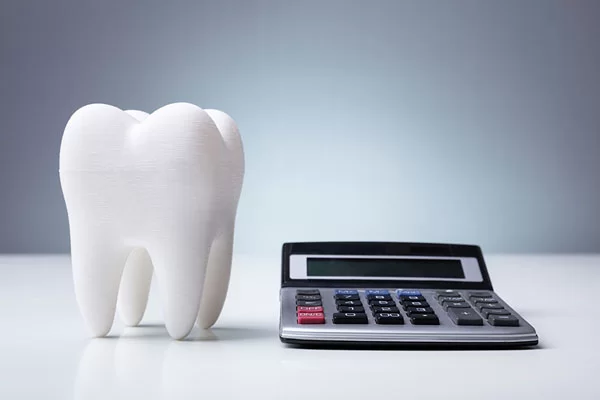
Pricing depends on how many implants you need, which attachment style you choose (ball, bar, or screw-retained), and whether you need any preparatory work like a bone graft or extractions. In general, implant-supported dentures range from roughly $5,000 to $15,000 per arch, compared to a few hundred to a couple thousand dollars for conventional full dentures.
We know that’s a real investment, which is why we work with patients on financing options to make treatment manageable. Contact our office for a personalized estimate based on your specific case.
The Implant-Supported Denture Process
Because implant-supported dentures rely on dental implants, treatment involves oral surgery and typically takes three to nine months from start to finish.
- Initial Consultation: We evaluate your oral health, review your dental history, and take imaging to determine if you have adequate jawbone density for implants.
- Extractions and Implant Placement: If you still have failing or unhealthy teeth, we’ll remove them first. Then we place the implant posts into the jawbone through a small incision, which is closed with sutures.
- Healing (Osseointegration): Over the next three to six months, the implants naturally fuse with your jawbone, creating a stable, permanent foundation.
- Attaching Your Denture: Once healing is complete, you’ll return to our Holyoke office, where we attach your custom denture to the implants, giving you a secure, natural-looking smile.
Are You a Candidate for Implant-Supported Dentures?
To qualify, you’ll need enough jawbone density to support dental implants. If bone loss has occurred, a bone graft may be recommended before implant placement. Candidates should also be in good general health, since certain systemic conditions can affect healing and implant success.
The best way to know for sure is a consultation with our Holyoke dentist, who can evaluate your oral health, walk through your options, and build a treatment plan around your goals.
Frequently Asked Questions
It depends on the type. Ball-retained and bar-retained dentures snap onto their implants and can be removed by the patient for cleaning each night. Screw-retained (fixed) dentures are attached permanently and can only be removed by your dentist during professional visits.
Ball-retained dentures typically use two to four implants. Bar-retained and screw-retained dentures usually need four to six implants to support a full arch. Partial implant-supported dentures may require only two implants, depending on how many teeth are being replaced.
Some mild discomfort is normal after implant surgery and during healing, but it’s typically manageable with cold compresses and over-the-counter pain medication. Most patients say the long-term comfort and stability are well worth the short recovery.
With good home care and regular dental checkups, implant-supported dentures can last many years—sometimes a lifetime. Brushing daily and keeping up with twice-yearly visits will help extend the life of your restoration.
Yes. Because implant-supported dentures are a bigger investment than conventional dentures, we offer financing options to help make treatment more affordable. Ask our team about available plans during your consultation.
Ready for a Stable, Natural-Looking Smile?
If messy adhesives and slipping dentures are holding you back, implant-supported dentures may be the solution you’ve been looking for. Contact our Holyoke dentist today at (413) 538-7400, and we’ll help you find the right option to restore your smile with confidence. Holyoke Mall Dental welcomes patients throughout Holyoke and the surrounding Western Massachusetts communities.