Are Your Wisdom Teeth Impacted?
That persistent pain or pressure in the back of your mouth isn’t something to ignore. Impacted wisdom teeth are extremely common and can lead to infection, swelling, gum disease, tooth decay, and damage to surrounding teeth if left untreated.
At our Holyoke dental office, our experienced oral surgeon, Dr. David Huang, helps patients understand the different types of wisdom teeth impactions and determine the best course of treatment for long-term oral health. If you’re experiencing discomfort or have been told you need wisdom teeth removed, call our Holyoke dental office at (413) 538-7400 to schedule an appointment with an oral surgeon near you.
We proudly serve patients in Holyoke, Springfield, Westfield, Southampton, South Hadley, and surrounding Western Massachusetts communities.
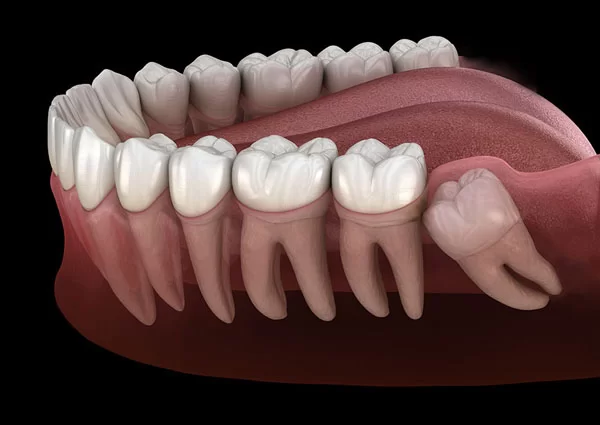
What Is a Wisdom Tooth Impaction?
A wisdom tooth impaction occurs when one or more third molars can’t fully erupt into the mouth due to a lack of space in the jaw, improper positioning, or obstruction by other teeth or bone.
As humans evolved, jaw size decreased, but the number of teeth did not—leaving many patients without enough space for wisdom teeth to emerge in the correct position. When the eruption is blocked, the tooth becomes partially erupted or fully impacted, trapping food and bacteria beneath the gums and increasing the risk of:
- Tooth decay
- Gum disease
- Infection in the gum tissue
- Damage to adjacent teeth
- Chronic pain and swelling
- Jawbone complications
In many cases, surgical extraction is the most effective way to protect oral health and prevent recurring problems.
Choose Dr. David Huang for Wisdom Tooth Removal in Holyoke, MA
When it comes to oral surgery, experience and compassion matter.
Dr. David Huang, DDS, MD, is a highly trained oral and maxillofacial surgeon with over 15 years of experience treating a wide range of oral, facial, and jaw conditions. He earned both a Doctor of Dental Surgery (DDS) degree and a medical degree (MD), completing extensive advanced training in anesthesia, surgical techniques, and complex extractions.
Dr. Huang is known for his gentle approach, advanced pain management techniques, and ability to make patients feel informed and comfortable throughout every step of treatment. Every procedure is customized to the patient’s individual needs, anatomy, and long-term oral health goals.
If you’re looking for a trusted oral surgeon near you in Holyoke, Dr. Huang delivers expert care with a patient-first mindset.

The Four Main Types of Wisdom Tooth Impactions
There are four primary types of wisdom tooth impactions, each defined by the angle, depth, and positioning of the tooth within the jaw:
- Mesial (Angular) Impaction
- Vertical Impaction
- Horizontal Impaction
- Distal Impaction
Understanding the type of impaction helps your oral surgeon determine whether monitoring or surgical removal is necessary.
Mesial (Angular) Impactions—The Most Common Type
A mesial impaction occurs when the wisdom tooth is angled forward toward the front of the mouth, pressing against adjacent teeth. These are often referred to as angular impactions and are the most common type of wisdom teeth impaction.
Why they’re a problem:
- Traps food and bacteria under the gum tissue
- Increase the risk of tooth decay and gum disease
- Can damage the surrounding molars over time
Depending on the degree of angulation and whether the tooth is partially erupted, your oral surgeon may recommend close monitoring or surgical extraction to prevent future complications.
Vertical Impactions
With a vertical impaction, the wisdom tooth is aligned properly but remains trapped beneath the gums or jawbone. While some vertically impacted teeth don’t cause immediate pain, they can still exert pressure on nearby teeth or bone.
Extraction may be recommended if:
- The tooth threatens the surrounding teeth
- Infection develops
- Pain or swelling occurs
- There is not enough space for a full eruption
Horizontal Impactions—The Most Painful Type
Horizontal impactions occur when the wisdom tooth lies completely sideways beneath the gums, pressing directly into neighboring teeth.
These are often considered the most painful type of impaction and pose the highest risk for:
- Severe pain and swelling
- Damage to other teeth
- Infection
- Jawbone erosion
Surgical removal is essential for horizontally impacted wisdom teeth. In some cases, a small amount of bone may need to be removed to safely extract the tooth.
Distal Impactions—Rare but Risky
A distal impaction happens when the wisdom tooth angles backward toward the rear of the mouth. This type is relatively rare but can still cause oral health issues depending on the tooth’s position.
If a distal impaction traps bacteria or creates pressure, your oral surgeon may recommend surgical extraction to prevent future problems.
Soft Tissue vs. Bony Impactions
In addition to angulation, impactions are classified by how much bone or gum tissue covers the tooth:
- Soft tissue impaction: The tooth breaks through the bone but remains covered by gum tissue
- Partial bony impaction: The tooth partially erupts through the jawbone
- Complete bony impaction: The tooth is fully encased in bone (often the most difficult to extract)
Symptoms of Impacted Wisdom Teeth
Common symptoms include:
- Jaw pain or pressure
- Swelling of the gums or face
- Difficulty chewing
- Bleeding gums
- Foul taste or odor
- Infection
- Changes in bite alignment
Important: Some impacted wisdom teeth cause no symptoms initially. Regular dental visits and X-rays are essential for early detection.
How Oral Surgeons Determine the Type of Impaction
During your visit to our Holyoke dental office, our oral surgeon will perform:
- A comprehensive oral exam
- Digital X-rays or 3D imaging
- Evaluation of symptoms, infections, and tooth positioning
This information allows us to determine the type of impaction, assess risk, and create a personalized treatment plan focused on long-term oral health.

Frequently Asked Questions
Mesial (angular) impactions are the most common, with teeth angled toward the front of the mouth.
Fully impacted, completely bony, and horizontally impacted wisdom teeth are the most challenging and often require advanced oral surgery techniques.
Not always. Some impacted teeth can be monitored if they aren’t causing pain, infection, or damage to surrounding teeth.
With modern anesthesia and pain management, most patients experience minimal discomfort during and after the procedure.
Our office provides expert wisdom tooth removal and oral surgery for patients throughout Holyoke and Western Massachusetts. Call (413) 538-7400 to schedule a consultation.
Schedule a Wisdom Teeth Consultation in Holyoke Today
If you’re experiencing pain, swelling, or have been referred for wisdom tooth removal, don’t wait until complications arise. Early treatment can prevent infection, tooth decay, and damage to other teeth.
Call (413) 538-7400 today to schedule an appointment with a trusted oral surgeon in Holyoke, MA. We proudly serve Holyoke, Springfield, Westfield, Southampton, South Hadley, and nearby communities.